The Complete Guide to Aircraft Maintenance Tracking

Aircraft maintenance isn't just about keeping a plane airworthy. It's about safety, regulatory compliance, and protecting what's usually the most expensive thing in your hangar. Whether you own a Cessna 172 outright or share a Citation with three partners, the way you track maintenance ends up shaping every other part of how you operate.
Why this is the part that bites groups
Poor maintenance tracking has a predictable arc. An inspection expires before anyone realises, and the aircraft is grounded — usually right before someone had a trip planned. An airworthiness directive slips by because nobody was watching for new ones. A small issue gets deferred and then deferred again, and what would have been a $400 fix becomes a $4,000 fix. Logbook gaps emerge a year later when an FAA inspector or a buyer asks for the paperwork that was never quite filed. Resale value takes a hit. None of these are dramatic on their own. The pattern is.
What a real tracking system has to capture
A maintenance system has four layers worth of information, and skipping any one of them creates the kind of gap that turns into a problem later.
The first layer is time on the airframe and engine: total time in service, time since major overhaul, cycles for turbine engines, and a running landings count. Without these, every other calculation is guesswork.
The second is the inspection and directive layer. Annual inspections every twelve months. The 100-hour inspection if it applies to your operation. Airworthiness directives, which are non-negotiable, and service bulletins, which technically aren't but usually save money. Manufacturer-recommended inspections that show up on schedules nobody remembers without a prompt.
The third is component tracking, which is where surprises hide. Propeller overhauls have intervals. Avionics calibrations expire. The ELT battery has to be replaced every two years or at fifty percent capacity, whichever comes first. Transponder certification is every twenty-four months. The static system and altimeter, for IFR operations, are also on a twenty-four-month clock. None of these are hard to track once they're in a system; all of them are easy to forget when they aren't.
The fourth is the modifications layer — STCs, field approvals, equipment additions and removals, and any weight-and-balance changes that came along with them. This is the part that auditors and prospective buyers care most about, and it's the part most often left in a folder somewhere instead of properly logged.
Paper, software, or both
The traditional answer is a paper logbook. It's FAA-acceptable, it requires no technology, and it's a permanent physical record. The trouble is that paper is easy to lose, hard to search, terrible at reminders, and almost impossible to share usefully with a co-owner or a mechanic. A binder is fine until it isn't.
A modern digital system reverses most of those trade-offs. Reminders fire automatically before anything is due. Records are backed up in the cloud, so a flood, a fire or a careless mechanic doesn't wipe out your history. Co-owners and mechanics can have appropriate access without everyone passing the same binder around. The history is searchable, the records are mobile-accessible, and a typical subscription runs $10 to $30 a month — about the cost of an unhelpful argument over a missed inspection. The honest answer for most groups is "both": digital as the primary system, with paper records retained for the items that legally require it.
Habits that hold up over time
A few things separate the groups that stay on top of maintenance from the groups that scramble. The first is logging time accurately and immediately — Hobbs start and end, Tach start and end, landings, flight conditions like day-versus-night and VFR-versus-IFR — in the moment, not at month-end when memory has eroded.
The second is setting reminder buffers that give you space to act. Thirty days before an annual is the sweet spot for most groups. Ninety percent of any 100-hour limit is when you start planning, not when you scramble. ADs are worth a quarterly check at minimum.
The third is keeping all the documentation, not just the parts that feel important at the time. Work orders, invoices, return-to-service entries, AD compliance paperwork, parts receipts with serial numbers — all of it. Six years later, the question of whether the part is the one the manufacturer recalled is much easier to answer when the receipt is still around.
The fourth is reviewing regularly. A monthly fifteen-minute scan covers what's coming up in the next sixty days, anything new in the AD or SB stream, component time limits, and where the squawk list stands. Without that habit, things slip not because anyone was negligent but because nobody was looking.
The fifth, for shared aircraft, is coordinating with co-owners. Everyone logs consistently. One person owns the responsibility for monitoring due dates (with a tool to back them up). Upcoming maintenance costs are surfaced early, before they become surprises, and aircraft status is visible to every owner — not just the one who happens to be flying that day.
The mistakes we keep seeing
The most common one is forgetting calendar-based items. Even an aircraft that barely flies still owes its annual every twelve months, its ELT battery every twenty-four, and its registration renewal every three years. The clock keeps running whether or not the engine does.
The second is ignoring service bulletins. They aren't mandatory the way ADs are, but they exist because the manufacturer noticed something. Treating them as informative rather than optional usually pays off.
The third is documenting repairs poorly. "Fixed the thing" isn't a record. A real entry says what was wrong, what was done about it, which parts were used (with part numbers), who did the work, and the return-to-service entry. Five minutes more on the day it's done; hours saved when the question comes up two years later.
The fourth is not planning financially for the big-ticket items. Engine overhauls run $30,000 to $70,000. Prop overhauls run $2,000 to $5,000. Avionics upgrades range from $5,000 to north of $50,000. Build a reserve every month against these numbers, and they stop being financial events. Skip the reserve, and they're funding crises every time they come due.
Where digital tools actually earn their keep
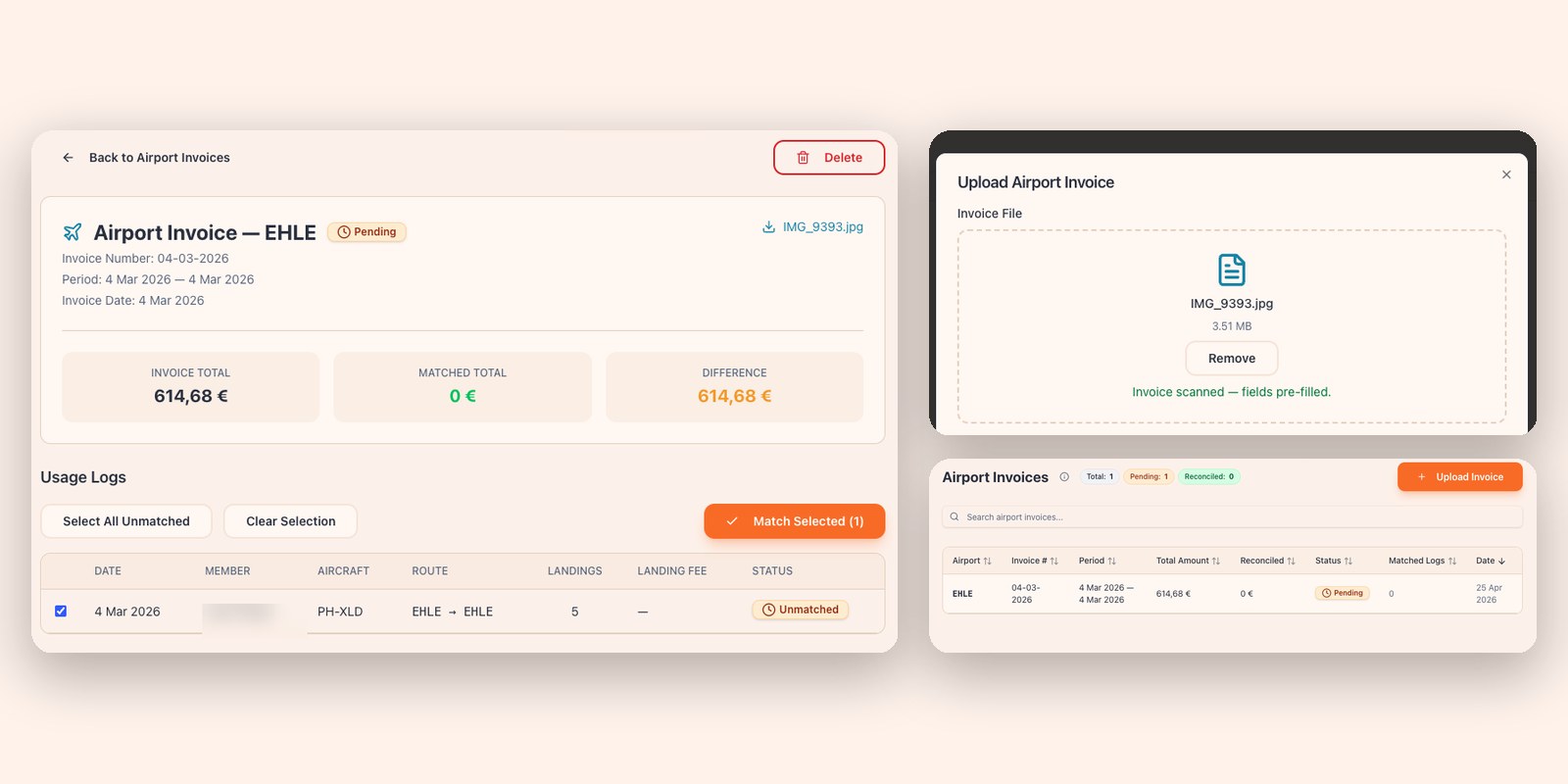
Platforms like Kai automate the parts of this that are tedious enough to skip. Time tracking comes from flight logs automatically. Reminders fire on both hour-based and calendar-based triggers. Co-owners and mechanics get appropriate, role-based access. Receipts and paperwork live in document storage tied to the aircraft, not someone's email. A compliance dashboard shows what's due next without anyone having to compile it.
One flying club we work with caught a $12,000 engine repair this way. Their tracking system flagged a slow rise in oil consumption over fifty hours, which led to an inspection, which led to an early diagnosis of worn rings, which turned a major repair into a much smaller one. The data was telling the story before anyone in the club had noticed.
Getting started
The first move is auditing where your aircraft actually stands today — every inspection, every component, every directive. Then gather the records that exist: logbooks, invoices, paperwork. Pick the system you're going to live in, whether that's paper, a spreadsheet, or dedicated software. Enter the baseline — current times, last inspections, anything coming up. Set reminders for everything due in the next twelve months. And put a recurring slot on your calendar for the monthly review. The system only works if it's used; the routine is what keeps it alive.
Good maintenance tracking isn't glamorous. It's just the thing that quietly keeps you flying safely, catches problems while they're still small, and protects what you've spent serious money on.
Try demo groups to see how automated maintenance tracking actually feels.
Contact us if you want to talk through how to set this up for your specific aircraft or group.